

TL;DR
Without a clear AI transformation roadmap, organizations end up funding a scattered mix of pilots that look busy but never compound into anything meaningful.
An enterprise AI transformation roadmap - or enterprise ai roadmap, however you search for it - earns its place by connecting AI work to business results - otherwise it's just documentation that no one opens after launch day.
A clear ai transformation strategy is what separates a roadmap that gets funded from one that gets filed away after the kickoff meeting.
A structured AI digital transformation roadmap brings governance, infrastructure, and executive ownership together - because leaving any one of those out tends to be expensive.
Without clear prioritization, teams spread thin across too many use cases and deliver none of them well. Sequencing is everything in a scalable AI business transformation roadmap.
Well-defined AI transformation roadmap phases reduce the operational and compliance risks that typically surface late - when they're hardest and costliest to fix.
Setting KPIs early forces the right conversations before work begins, and makes value much easier to demonstrate when leadership starts asking questions.
Governance and optimization are what turn a successful pilot into something the organization can actually build on long-term.
CodeGeeks Solutions brings the structure, accountability, and enterprise experience to make all of it stick.
Introduction
Most AI pilots stall not because the technology fails, but because there's no real plan behind them. Running disconnected experiments across teams rarely adds up to anything meaningful at the company level. Before diving into the roadmap itself, it's worth understanding why digital transformation is essential for business growth in the first place - the roadmap only matters because the underlying shift does.
What actually moves the needle, based on what we've seen at CodeGeeks Solutions, is committing to a structured AI transformation roadmap for enterprises before anything gets built. IBM puts it plainly: AI transformation works when strategy, governance, and clear outcomes come first - not as an afterthought once the tools are already deployed. Whether you call it an enterprise digital transformation roadmap or an AI-specific one, the same discipline applies.
This guide walks through a practical enterprise AI transformation roadmap, complete with a template and a straightforward diagram that leadership teams can start working with immediately.
What an AI Transformation Roadmap Includes and What It Does Not
An AI business transformation roadmap is what forces an organization to get specific about something most prefer to leave vague: where AI actually fits into how the business runs, makes decisions, and generates value. It connects AI capabilities to strategy, operations, governance, and financial goals - not as a vision statement, but as a working plan.
That said, it has limits. A roadmap alone won't move anything. Real progress still depends on leaders who are actively invested, not just nominally supportive. And no document, however thorough, substitutes for the cultural shift that has to happen at the team level. If people aren't willing to change how they work, the roadmap sits on a shelf.
Public definitions of Business transformation emphasize structural change across processes and technology. Forbes analysis on business transformation published with SAP reinforces that transformation requires operating model redesign rather than incremental improvement. Therefore, a successful roadmap for digital transformation with AI must address enterprise wide change.
At CodeGeeks Solutions, transformation engagements focus on structural integration, not isolated automation.
AI Digital Transformation Roadmap Diagram
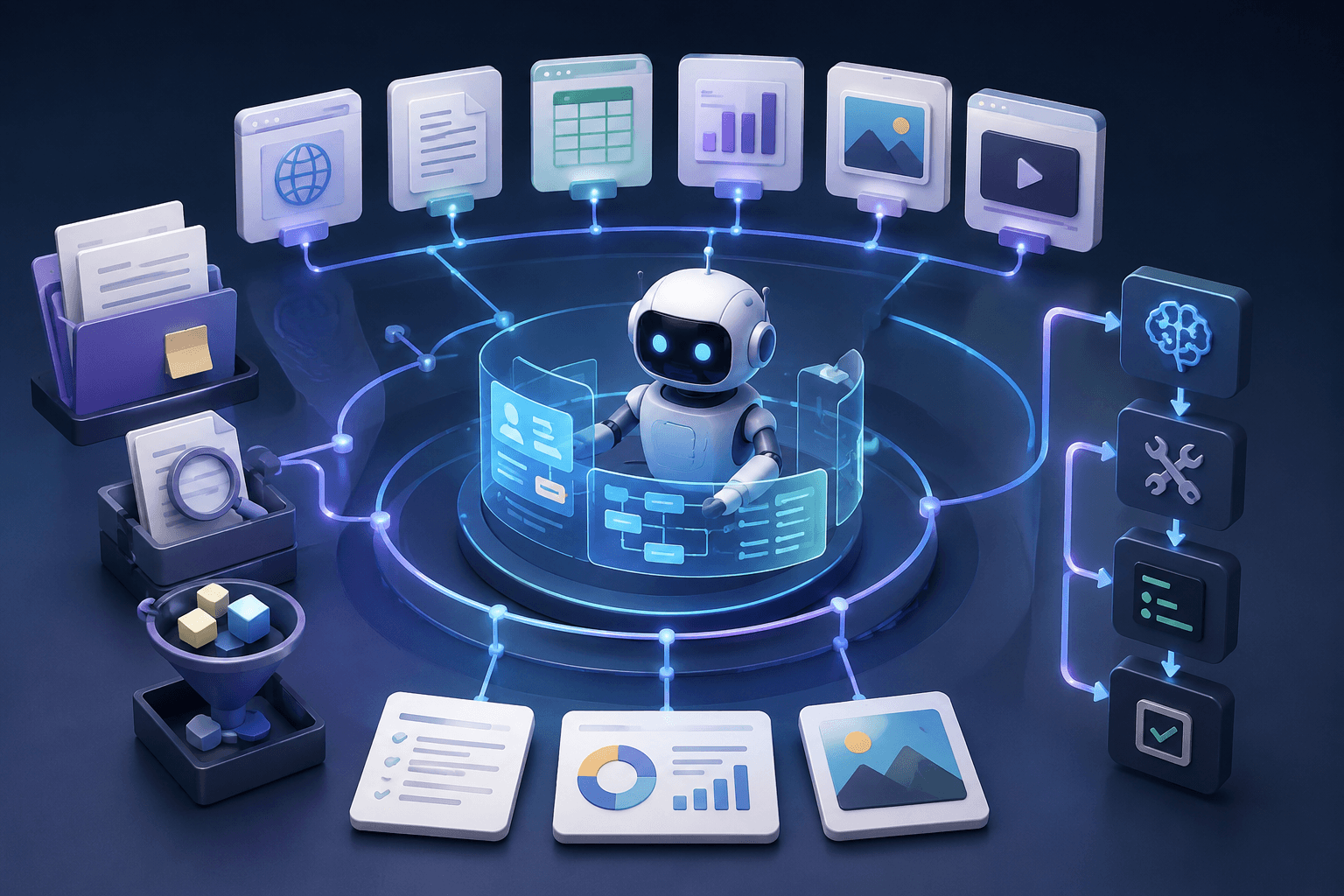
The transformation roadmap diagram doesn't need to be complicated - a clear linear sequence is enough. It starts with an assessment, moves into strategy definition and prioritization, then foundation-building, a pilot launch, scaling what's working, and finally settling into ongoing operations and continuous improvement.
So what does an AI transformation roadmap look like in practice? Usually a single horizontal timeline with seven stages in a row - assess, strategize, prioritize, build the foundation, pilot, scale, operate - each one feeding the next rather than running in isolation.
The shape of it will feel familiar to anyone who's worked through a digital transformation roadmap before - but with a layer on top that's specific to AI: model governance, data control, and compliance oversight aren't optional extras here, they're built into the structure from the start.
Many leadership teams take this framework and turn it into an internal AI transformation roadmap infographic - something they can put in front of a board to create shared visibility and get everyone aligned on where the organization is actually headed.
AI Transformation Roadmap Phases
The following AI transformation roadmap phases reflect the methodology applied by CodeGeeks Solutions across enterprise engagements.
Phase 1 - Assess Readiness
Before any AI work begins, you need an honest picture of where things actually stand. The first step in any enterprise AI transformation roadmap is a clear-eyed look at data maturity, system architecture, compliance exposure, and what the organization is genuinely capable of executing.
Old infrastructure has a way of quietly capping what's possible. AI integration frequently ends up tied to broader modernization efforts - and the sooner those dependencies are on the table, the better. For organizations dealing with outdated systems, AI driven legacy modernization services can run in parallel with transformation planning rather than becoming a blocker.
Starting with a proper assessment isn't about slowing things down. It's about making sure the plan reflects reality - not just ambition.
Phase 2 - Strategy and Business Alignment
Every AI initiative needs a clear answer to a simple question: what business problem does this actually solve? Whether the goal is revenue growth, cost efficiency, or risk reduction, that connection has to be explicit - not implied.
IBM has long emphasized that leadership alignment is what separates AI projects that generate lasting value from those that plateau. At CodeGeeks Solutions, that thinking is built into how every roadmap is structured - with executive accountability and measurable targets defined before development begins, not after. Because even a technically flawless deployment can fail to move the needle if it was never tied to financial performance in the first place.
For a more detailed walkthrough of this stage on its own, see how to develop a digital transformation strategy, and once targets are set, how to measure digital transformation KPIs covers how to track whether they're actually being hit.
Phase 3 - Use Case Portfolio and Prioritization
Not all use cases generate equal value. Prioritization frameworks evaluate feasibility, impact, and compliance risk.
Workflow automation examples such as those detailed in n8n AI workflow automation examples demonstrate how focused initiatives deliver measurable operational gains.
Successful AI driven organizations, as discussed in what makes AI startups succeed, prioritize measurable outcomes over experimentation.
This stage defines momentum within the AI transformation roadmap for enterprises.
Phase 4 - Data and Platform Foundation
AI systems are only as reliable as the infrastructure underneath them. Without clean data, secure architecture, and proper monitoring in place, everything built on top is fragile.
Governance needs to spell out who can access what, what gets logged, and how you audit it. When data architecture is patchy and inconsistent, operational risk grows quietly in the background - and so does technical debt. A solid platform foundation isn't a nice-to-have; it's the backbone of any serious AI digital transformation roadmap.
Phase 5 - Pilot Prove Value Fast
A pilot isn't just a test - it's a proof of concept with stakes. Every pilot should have a clear performance metric attached to it before it starts, not after.
At CodeGeeks Solutions, pilots are scoped deliberately: tight enough to show real results quickly, broad enough to stay connected to the bigger AI business transformation roadmap. Short feedback cycles do more than validate the tech - they build the kind of internal confidence that gets leadership to say yes to the next phase.
Phase 6 - Scale Across Teams and Workflows
Once a pilot has proven its value, the goal shifts from "does this work?" to "how do we roll this out everywhere?" That means standardized governance so that what gets deployed in one department doesn't look completely different in the next.
A well-structured roadmap for digital transformation with AI makes replication possible without cutting corners on compliance or data security. Scaling also means people change how they work - so change management and training aren't optional steps you fit in at the end.
Phase 7 - Operate, Govern, and Optimize
Getting a pilot to work is one thing. Turning it into something the organization can rely on for years is another. This phase is where that transition happens - through continuous monitoring, bias control, and steady performance improvement. Without a governance structure holding it together, even the most promising AI initiatives tend to drift and stall. This final phase is what locks in long-term success across all the AI transformation roadmap phases.
AI Transformation Roadmap Template
The AI transformation roadmap template - or ai transformation framework, if that's the term your organization uses internally - that CodeGeeks Solutions works from covers seven core components. Some teams prefer to call it an ai transformation frameworks library rather than a single template, since most of these pieces get reused across multiple initiatives:
Strategic objectives linked to KPIs
Readiness assessment findings
Prioritized use case portfolio
Data governance framework
Pilot success metrics
Scaling strategy
Operational oversight structure
Each piece connects to the others. Together they give leadership a clear picture of where the organization stands, where it's going, and how to tell whether it's actually getting there.
AI Transformation Roadmap Best Practices
The AI transformation roadmap best practices that consistently show up in successful enterprise implementations come down to a few core habits: executive sponsorship from day one, cross-functional governance committees that keep silos from forming, ROI defined before work begins rather than after, iterative deployment cycles that allow for course correction, and compliance and monitoring built into the process rather than bolted on at the end.
For organizations also thinking about how to staff and resource the work efficiently, it's worth exploring what 5 key benefits of outsourcing software development can bring to an AI program - particularly when internal capacity is stretched.
These are the practices CodeGeeks Solutions brings into every engagement, not as a checklist, but as the actual way work gets structured.
Common Mistakes
Most AI transformation efforts that stall or fail do so for predictable reasons. Pilots get launched without defined success metrics, so there's no way to know if they actually worked. Regulatory exposure gets underestimated or ignored until it becomes a problem. Internal AI maturity gets overestimated, leading to timelines and expectations that reality can't meet. AI gets siloed inside IT rather than treated as a cross-business initiative. And when it's time to scale, the budget isn't there to do it properly.
Each of these on its own is manageable. Together, they quietly erode the foundation of any enterprise AI transformation roadmap before it has a chance to deliver.
How CodeGeeks Solutions Helps
AI transformation services at CodeGeeks Solutions start from a straightforward premise: AI should serve the business, not exist alongside it. Every project is scoped around outcomes you can actually measure. The AI automation services for businesses side of the work focuses on the operational layer - tightening up workflows and putting infrastructure in place that holds up as usage grows.
Results speak louder than methodology, so independent client reviews are available on the Clutch profile of CodeGeeks Solutions, and real-world case studies walk through how the approach plays out in practice across different industries and use case studies.
What ties it all together is a commitment to structure - because moving fast only works when the foundations are solid.
Final Thoughts
Strategy only means something when it translates into action - and that's exactly what a well-built AI digital transformation roadmap is designed to do. Technology on its own, without the governance to back it up, rarely produces anything that lasts.
At CodeGeeks Solutions, every enterprise AI initiative is anchored in structure, accountability, and measurable outcomes. Organizations that treat governance, prioritization, and optimization as core parts of their AI business transformation roadmap - not afterthoughts - are the ones that are still seeing results two or three years down the line.
FAQ
What's the difference between AI transformation and digital transformation? AI transformation focuses specifically on integrating artificial intelligence into core operations and decision processes. Digital transformation broadly modernizes technology and workflows, while AI transformation embeds intelligent automation within those systems.
What should an enterprise AI roadmap include first? An enterprise roadmap should begin with a readiness assessment covering data maturity, infrastructure capacity, governance capability, and regulatory exposure.
How do we pick the right first use case? The optimal first use case combines measurable financial impact with manageable technical complexity. High volume manual workflows often provide the clearest early ROI.
How do we measure ROI and manage risk? ROI should be measured through productivity improvements, cost reduction, and cycle time compression. Risk management requires governance frameworks, monitoring mechanisms, and defined human oversight policies.
How long does a roadmap take to execute? Execution timelines vary based on enterprise scale and data maturity. Initial pilot results are often measurable within months, while full scaling may extend across multiple quarters.
How do you build an AI transformation roadmap step by step? Start with a readiness assessment, then lock in strategy and executive sponsorship before touching a use case list. From there, prioritize by feasibility and impact, build the data and platform foundation, run a scoped pilot with a defined success metric, scale what works with standardized governance, and finally move into ongoing operation and optimization. That's the short version of how to build an AI transformation roadmap - the seven phases above walk through each step in more depth.
How do I start an AI transformation project? Start smaller than feels comfortable: run a readiness assessment, pick one high-impact, technically manageable use case, and get executive sponsorship locked in before writing a single line of code. A narrow, well-scoped pilot with a clear success metric builds the internal case for everything that follows - trying to launch several initiatives at once is the more common way these projects stall.