

Outsourcing software development rarely starts with a formal strategy session. More often, it begins quietly. A deadline slips again. A key engineering role stays open for months. The product roadmap grows faster than the team can realistically support.
At some point, companies start looking for ways to relieve pressure without committing to long hiring cycles. That’s usually where outsourcing enters the picture - not as a bold transformation initiative, but as a practical response to very real constraints.
Over time, outsourcing becomes a tool. Some teams use it to move faster. Others to access skills they simply can’t hire locally. Sometimes it’s about keeping momentum while the business is still figuring out what it wants to build long term. Cost plays a role, but in practice, it’s rarely the only factor.
In reality, outsourcing rarely works the same way twice. Everything comes down to how a company is actually set up on the inside - how decisions are made, who owns the product, and how teams communicate day to day. In one environment, outsourcing smooths things out. In another, it brings hidden issues to the surface. Teams that recognize this early tend to make more practical choices instead of blindly copying models that worked somewhere else.
What Is Software Development Outsourcing
At its core, software development outsourcing means involving an external team in building, maintaining, or scaling your product. That involvement can look very different from company to company.
Some outsource entire projects. Others extend internal teams with specific roles. In many cases, outsourcing sits somewhere in between - a hybrid setup where internal ownership remains, but execution is shared.
The key point is that outsourcing is not one model. It’s a spectrum of collaboration approaches, each with its own advantages and disadvantages of outsourcing software development.
Benefits of Delegating Software Development to External Teams
The real value of delegating software creation to outside partners shows up when you treat it as genuine collaboration rather than just handing off tasks.
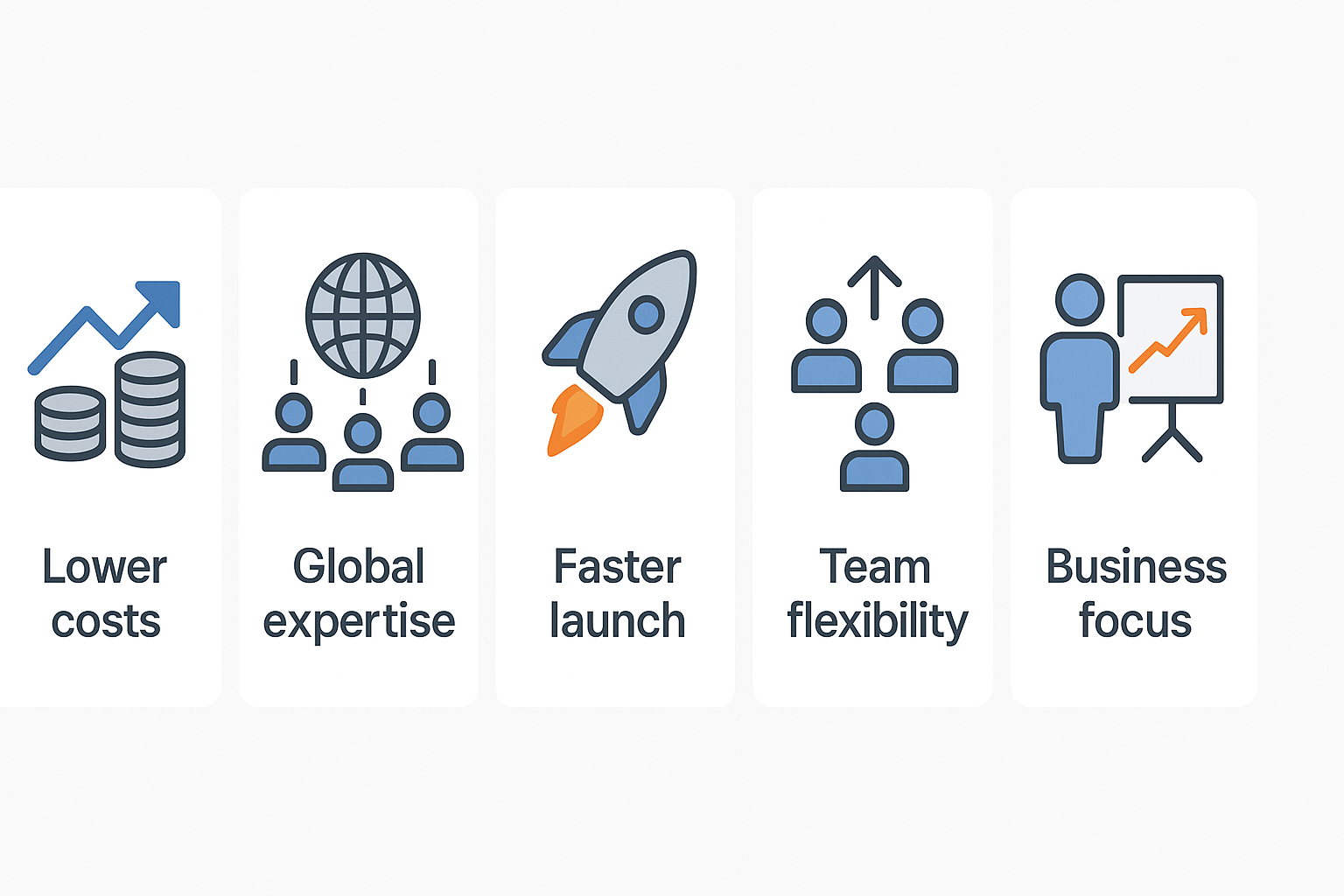
1. Reduced Spending on Operations and Recruitment
Bringing engineers onto your permanent staff costs a lot, takes time, and carries risk, particularly in early phases. Just finding candidates can stretch across several months, then comes integration and long-term obligations. Working with external teams lets businesses match their budget to what's actually being delivered. This adaptability stands out as one of the clearest upsides of bringing in outside development resources, particularly when workloads shift constantly.
2. Reaching a Worldwide Pool of Specialists
Plenty of businesses look to external partners not for pricing reasons, but for expertise. Specific technical capabilities, industry knowledge, or seasoned professionals can be scarce in your local market. External partnerships open doors to teams who've already built this expertise - cutting down the time needed to get up to speed considerably.
3. Quicker Path to Launch
Outside teams typically hit the ground running from their first day. No recruitment queue, no internal reorganization, and fewer holdups before actual development kicks off. In competitive spaces, being fast often makes all the difference.
4. Flexibility in Team Size and Adaptation
External partnerships make it simpler to expand or contract your team as goals shift. This proves especially useful during early product exploration, building minimum viable versions, or major launches.
5. Concentration on Central Business Activities and Vision
When execution responsibilities are shared, your internal people can dedicate more attention to product choices, user input, and where things are headed long-term - the areas where insider knowledge counts most.
One emerging advantage of outsourcing is access to AI-driven development capabilities. Modern outsourcing is no longer limited to traditional coding — it increasingly includes AI-assisted architecture design, intelligent automation, and workflow optimization.
Companies looking to modernize faster often explore AI transformation services as part of their outsourcing strategy. This approach combines engineering talent with AI-enabled delivery models, allowing businesses to accelerate innovation while maintaining strategic alignment and governance.
Disadvantages of Outsourcing Software Development
The pros and cons of outsourcing software development become more visible as projects grow. Most risks don’t come from outsourcing itself, but from how it’s managed.
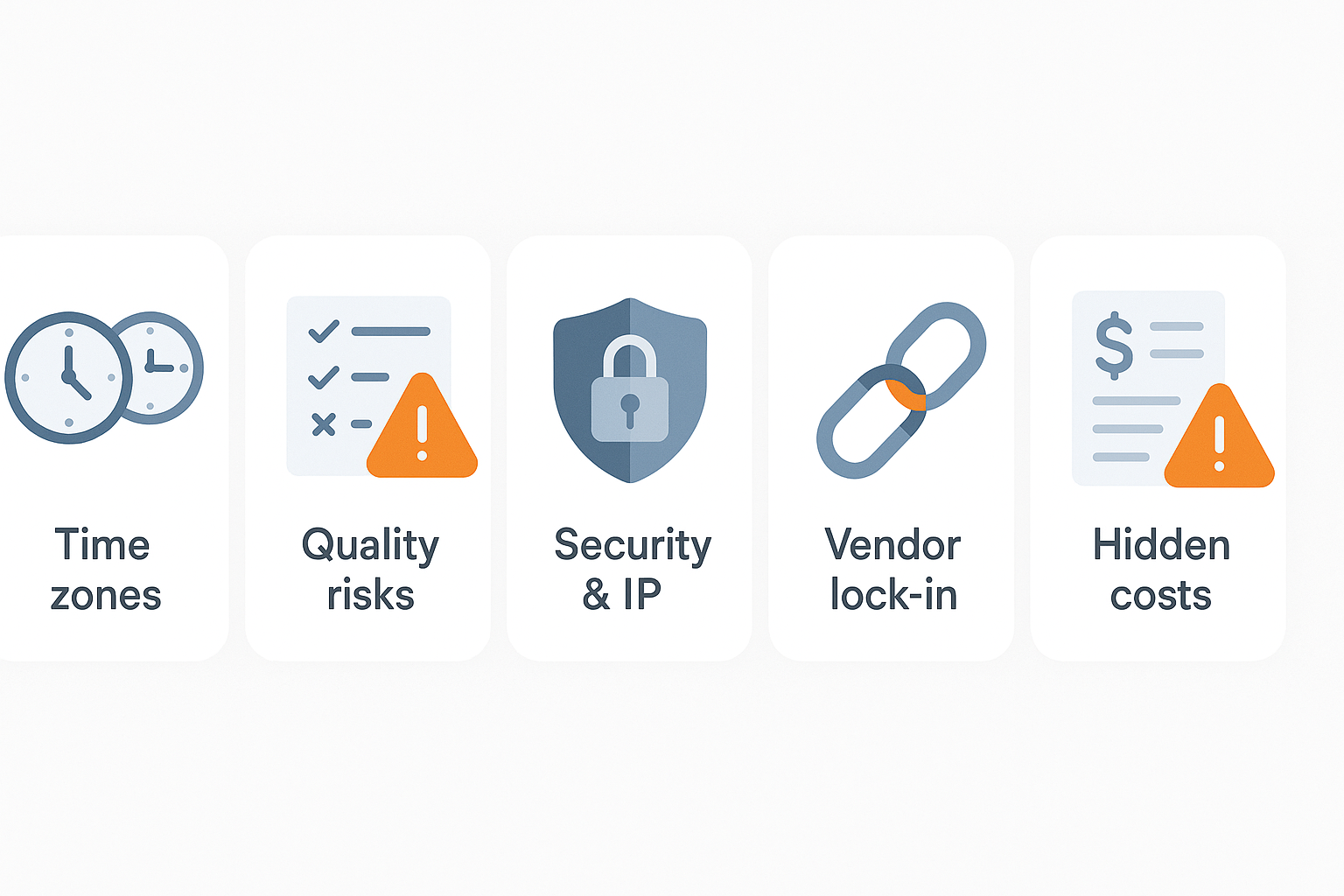
1. Communication and Time Zone Challenges
Distributed teams require deliberate communication. Without clear processes, feedback loops slow down and small misunderstandings turn into delays.
2. Quality Control Risks
Quality doesn’t enforce itself. Without shared standards, code reviews, and technical ownership, problems surface later - when fixing them is more expensive.
3. Security and IP Concerns
Outsourcing involves sharing access to systems, data, and intellectual property. Legal agreements and technical safeguards are not optional here - they’re foundational.
4. Vendor Dependency
When knowledge stays only with the vendor, switching partners becomes difficult. This is one of the less obvious software outsourcing pros and cons that teams often underestimate early on.
5. Hidden or Unexpected Costs
Poorly defined scope, unclear responsibilities, and weak estimation practices often lead to costs that weren’t planned initially.
IT Outsourcing Pros and Cons by Project Type
Not every project benefits from outsourcing in the same way.
- MVPs and early-stage products often benefit from external expertise.
- Legacy system maintenance can work well with experienced teams.
- Core platforms require stronger internal involvement.
- Highly regulated systems demand careful compliance management.
This context matters more than general IT outsourcing pros and cons lists.
Outsourcing vs In-House Development: How to Choose
In-house teams offer deep product knowledge and direct control. Outsourcing offers speed, flexibility, and access to skills.
In practice, many successful companies combine both - keeping ownership in-house while outsourcing execution-heavy parts of development.
This hybrid approach often balances the advantages and disadvantages of outsourcing software development more effectively than choosing one extreme.
How to Reduce the Risks of Software Outsourcing
Outsourcing failures are rarely sudden. They usually build up through small process gaps.
Teams that succeed tend to:
- define ownership clearly,
- document decisions and architecture,
- review work regularly,
- and treat communication as a priority, not an afterthought.
Industry perspectives like this Forbes Tech Council article on outsourcing software development pros and cons consistently point to execution discipline as the real differentiator.

If you're thinking about bringing in outside help for development and need to be sure before putting in time and money, teaming up with a solid technical partner can save you months of going back and fixing things. CodeGeeks Solutions works with teams to look at different ways of working together, figure out what's actually doable, and set up ways of delivering work that can handle growth.
Ultimately, successful outsourcing depends on clarity of scope, governance, and the ability to scale beyond simple feature delivery. As automation becomes central to operations, many organizations require partners who can implement AI-powered workflows safely and reliably.
For businesses seeking structured automation within outsourced engagements, AI automation services for businesses provide a practical path forward — ensuring integrations, monitoring, and measurable performance outcomes are built into the delivery model from the start.
👉 Get in touch with us to talk through what you're building and see if outside development makes sense for what you're after.
FAQ
Is outsourcing software development cost-effective?
It can be - when scope and expectations are clear.
What are the main risks of IT outsourcing?
Communication gaps, quality issues, and vendor dependency.
How to choose a reliable outsourcing partner?
Look beyond rates. Focus on process, transparency, and experience.
When is in-house development better than outsourcing?
For core IP, sensitive systems, and long-term platforms.
Can outsourcing work for long-term projects?
Yes, with proper governance and knowledge sharing.
How to control quality in outsourced software development?
Through shared standards, reviews, and continuous feedback.
Is outsourcing suitable for startups and MVPs?
Often yes - especially when speed and expertise matter.