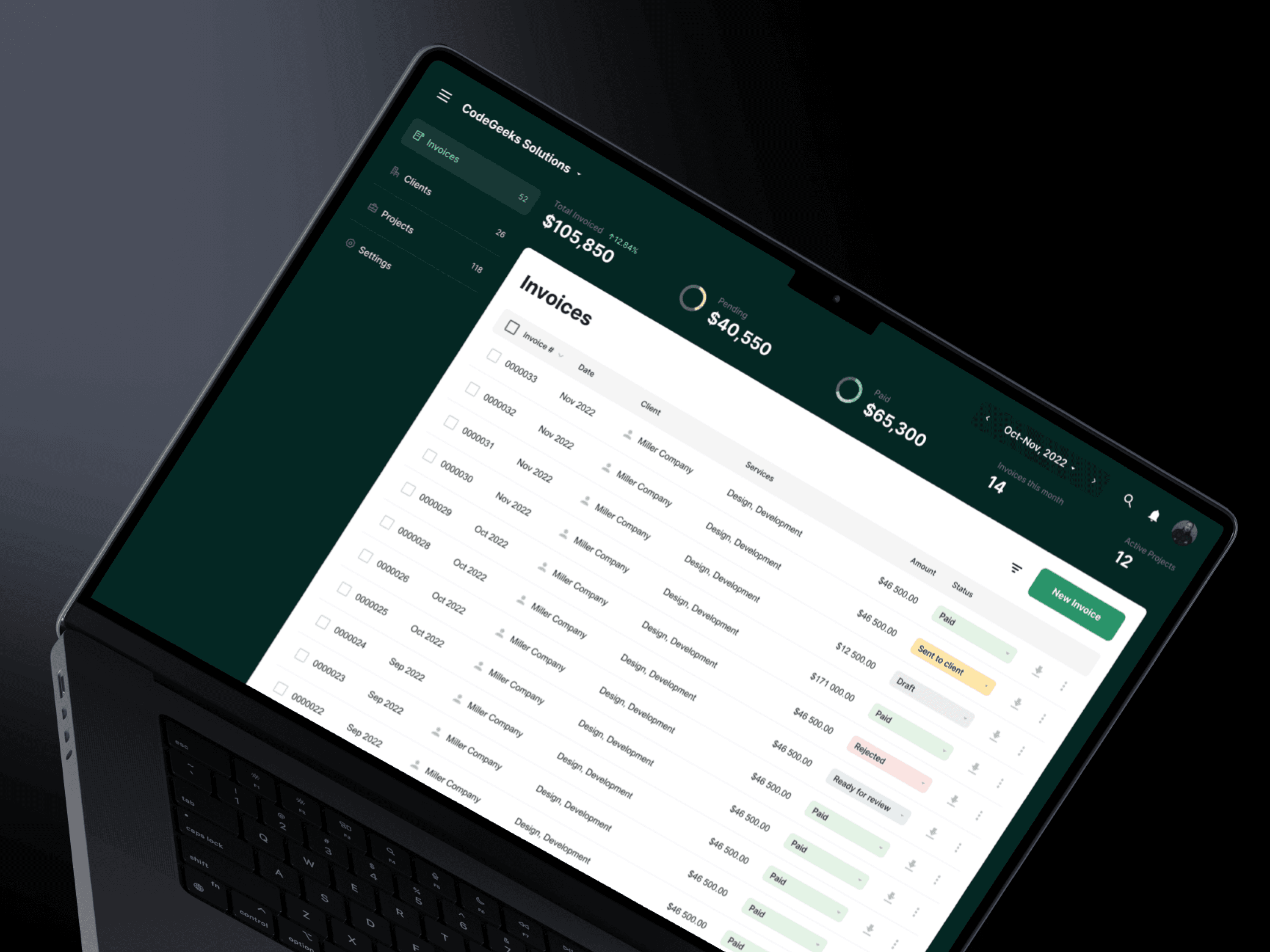


AI startups are no longer small side projects hidden inside research labs. Today, many founders are launching real products with AI at the core - not experiments, but tools meant to be used in everyday business workflows. These products automate decisions, adapt to user behavior, and deal with complexity that traditional software often can’t handle well.
At the same time, starting an AI startup feels very different from launching a classic SaaS product. Questions around data access, model selection, infrastructure costs, and user trust show up immediately - not later, but from the first working version.
Finding a Real AI Startup Idea
Successful AI startups don’t start with models or frameworks. They start with a problem that clearly benefits from automation or machine-driven decisions.
Strong ideas usually come from situations where:
- decisions are slow, manual, or inconsistent
- large amounts of data hide patterns humans miss
- personalization at scale is impossible without AI
- rule-based systems break under real-world complexity
Common examples include lead scoring, anomaly detection, predictive maintenance, or AI assistants embedded directly into existing workflows.
A useful way to pressure-test ideas is to look at how other founders describe their early failures. Threads like how to build an AI startup from scratch show a recurring pattern: most AI startups fail because the problem or value proposition is unclear - not because the model is bad.
If you want to build an AI startup that survives beyond the first release, the idea should be clear enough to explain in one sentence and valuable enough that users would notice if it disappeared.
Choosing the Right AI Use Case

Once the idea is clear, the next decision is simple but critical: what exactly will the AI do? This choice affects data needs, system complexity, costs, and how easy the product is to explain to users.
Most early-stage AI startups focus on one primary direction:
- Classification - sorting, tagging, or filtering data at scale
- Prediction - forecasting outcomes, risks, or demand
- Recommendation - prioritizing options or suggesting next actions
- Generation - producing text, summaries, or structured outputs
Trying to cover multiple directions at once usually slows teams down and blurs the product’s value. Startups that commit to one clear AI function tend to move faster and learn more from real usage. In practice, this focus often separates a successful AI startup from an impressive but unfocused demo.
Choosing the right tech stack is not only about selecting models and frameworks — it’s about designing an architecture that can scale, integrate with external systems, and evolve as your product matures. Early technical decisions directly affect performance, cost efficiency, and future fundraising conversations.
Many founders accelerate this phase by leveraging structured AI transformation services to define architecture, data strategy, AI workflow orchestration, and governance from day one. This helps avoid costly rewrites later and ensures the product is built on a scalable foundation rather than short-term experimentation.
Data and Model Decisions

Data is the foundation of any AI product, and early decisions here are hard to undo later.
Founders need to answer a few questions early:
- Where does the data come from?
- Who owns it?
- How clean or noisy is it?
- Can it be used legally and securely?
Many teams starting an AI startup don’t begin with massive datasets. Instead, they rely on customer-provided data, integrations with existing systems, or relatively small but highly relevant datasets.
On the model side, most early-stage teams use pre-trained models or APIs rather than training from scratch. Platforms like Google Cloud’s AI support for startups help teams experiment without heavy upfront infrastructure costs. Early on, reliability and iteration speed matter far more than squeezing out maximum accuracy.
Finding a Co-Founder or Building the Core AI Team
When building an AI startup, team composition matters more than headcount.
Most early teams operate effectively with:
- a founder focused on product or domain expertise
- an AI/ML engineer with a practical mindset
- a full-stack engineer (sometimes combined with ML skills)
A co-founder makes sense when responsibilities are clearly split. Adding people too early often increases coordination overhead and slows progress. Small teams tend to make better decisions while navigating early uncertainty.
Frontend for AI Startups
In AI products, frontend is not just about design - it’s about trust.
Users need clarity on:
- what the AI is doing
- how confident it is
- when it might be wrong
Clear explanations, simple controls, and visible feedback loops often matter more than visual polish. A strong interface can compensate for imperfect models, while a confusing UX can block adoption even if the AI performs well.
Backend and AI Infrastructure

Backend decisions determine whether your AI product can scale reliably.
Most AI backends include:
- inference pipelines
- request handling and batching
- monitoring and logging
- fallback and error-handling mechanisms
Ignoring observability early is risky. Every AI decision should be traceable. As usage grows, infrastructure must balance latency, cost, and reliability - especially for real-time or user-facing features. These foundations support the long-term steps to start an AI startup that can grow beyond pilots.
MVP Development for AI Startups
An AI MVP is not a stripped-down final product. It’s a learning tool.
A solid AI MVP includes:
- a real data flow
- a working inference layer
- clearly defined limitations
- basic monitoring and feedback
What it doesn’t need:
- full automation
- advanced scaling
- perfect accuracy
Teams that treat MVPs as experiments - not marketing showcases - move faster when building an AI startup and avoid costly rewrites later.
Launching and Getting First Users
AI startups rarely succeed with a public launch on day one.
Most teams start with:
- closed beta users
- pilot customers
- direct onboarding
The goal is to observe real behavior. Do users rely on the AI output? Does it save time or improve decisions? Does it become part of their workflow? These signals matter far more than opinions when you create an AI startup.
From MVP to a Real AI Product

Scaling makes sense only after patterns repeat.
A product is ready to grow when:
- the same use case appears across users
- data quality improves over time
- infrastructure costs are predictable
At this stage, how to build an AI startup turns into how to build a business. Teams invest in better models, automation, and go-to-market strategy - or decide to pivot based on evidence.
Launching an AI startup is only the beginning — scaling it requires operational reliability, automation, and disciplined execution.
Teams ready to move from MVP to production-grade deployment can benefit from structured AI automation for startups. From workflow automation and system integration to monitoring and performance optimization, this approach helps turn early traction into sustainable growth.
If you’re working on an AI startup, the hardest part usually isn’t the model. It’s knowing when to stop thinking and start building something real.
We’ve seen founders lose months by polishing ideas that never meet users. We’ve also seen teams move fast by narrowing scope early and accepting that the first version won’t be perfect.
That’s the stage where we usually step in at CodeGeeks Solutions - helping founders make sense of the idea, cut it down to a realistic MVP, and build something that can grow without falling apart later.
👉 Talk to our team about your AI startup idea
FAQ
How long does it actually take to get an AI startup moving?
There’s no clean answer here. Some teams reach a usable MVP in a couple of months. Others need longer because data access or integrations slow everything down. What matters more than the timeline is whether the product starts being used.
Do I need to be technical myself?
No. But someone close to the product must be able to make technical decisions. That can be a co-founder, or it can be a team you trust and work with daily. Without that, progress becomes guesswork.
How small can the team realistically be?
Smaller than most people expect. Many early AI startups operate with two or three people for quite a while. Once the core use case is clear, growing the team makes more sense.
What kind of AI makes sense at the start?
Almost nobody trains custom models on day one. Most teams start with existing models or APIs and focus on solving the problem first. Training your own model usually comes later - if it’s needed at all.
How much data do you need before you begin?
Enough to learn something useful. Early products often start with limited datasets, as long as the data is relevant and consistent. Large but messy datasets slow things down more than they help.
What budget should founders expect for an AI MVP?
In practice, many AI MVPs land somewhere between $30k and $100k. The range is wide because scope, integrations, and infrastructure choices matter a lot.