

Legacy systems rarely turn into a problem overnight. Most of them did exactly what they were supposed to do for years - until business expectations started changing faster than the technology underneath. What once felt stable slowly becomes expensive to maintain, risky to change, and difficult to scale.
This guide explains legacy modernization strategies in a practical way. Not as a single “right answer,” but as a set of approaches - each with clear trade-offs, real constraints, and realistic outcomes - so you can choose a legacy modernization strategy that fits your system, your risk tolerance, and your business goals.
Best Strategies for Legacy Modernization
There is no universal solution to legacy modernization. The best strategies for legacy modernization depend on how critical the system is, how much disruption the business can tolerate, and how quickly change is required.
Below are the most common approaches teams use - explained the way they’re evaluated in real projects, not theory.
1. Rehost (“Lift and Shift”)
What it is
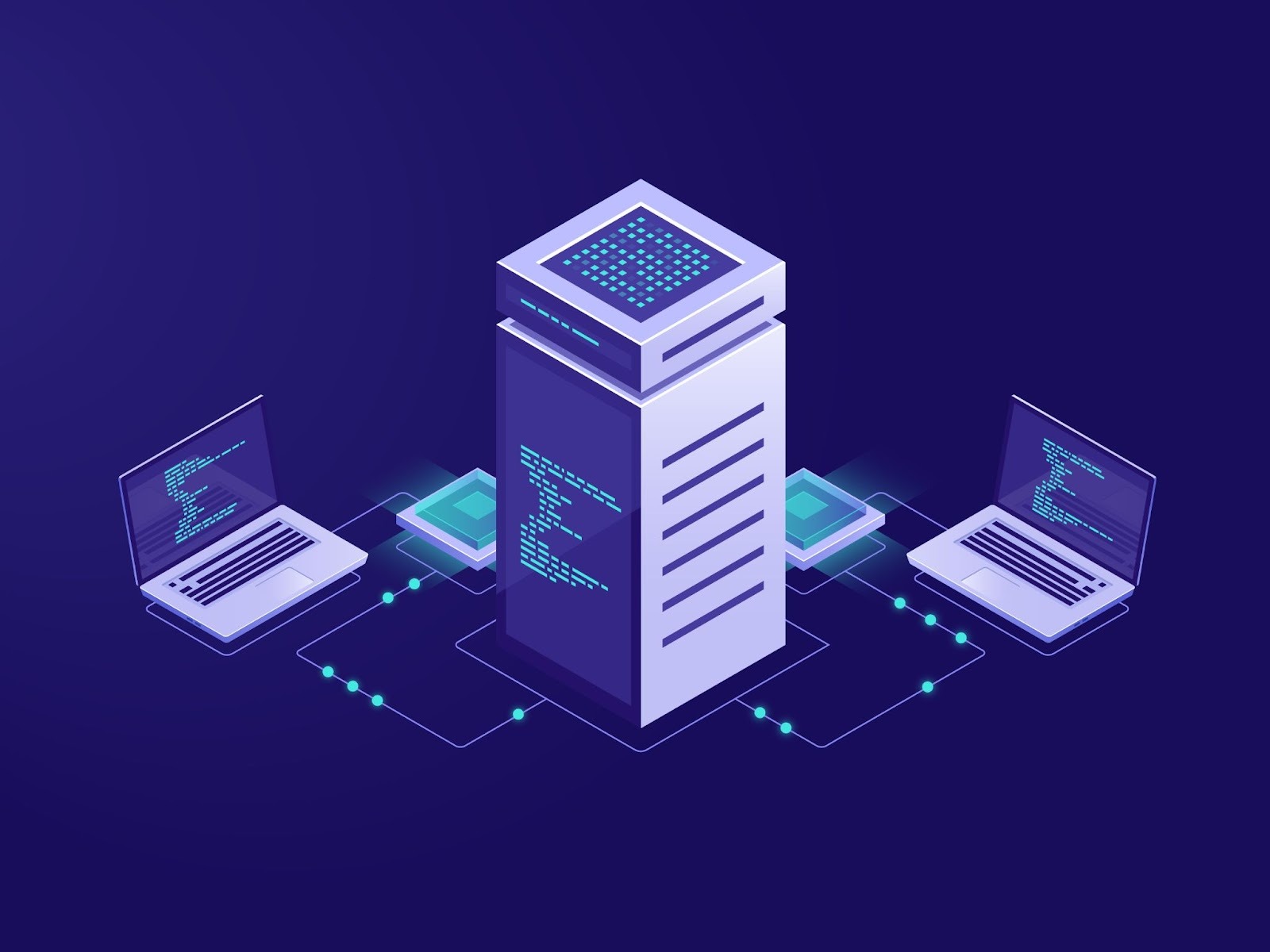
Moving an existing application to a new infrastructure (most often cloud) with little or no change to the codebase.
Applies to
- Stable systems with limited feature changes
- Applications running on aging on-prem infrastructure
- Systems where reliability and cost are bigger issues than functionality
Use when
- Infrastructure is the main bottleneck
- The business needs fast results with minimal risk
- Functional changes are not a priority right now
What this looks like in practice
A core internal application has been running on on-prem servers for more than a decade. It’s stable, but infrastructure costs keep rising, and outages are harder to manage as hardware ages. The team moves the system to the cloud without touching the code. Nothing changes for users, but deployments become more predictable and infrastructure incidents drop. The business gains breathing room - even though architectural limitations remain.
2. Replatform
What it is
Upgrading the underlying platform or runtime while keeping the application logic largely intact.
Applies to
- Applications that still deliver value
- Systems constrained by outdated middleware or databases
- Platforms that struggle with performance or scalability
Use when
- You need operational improvements without a full rewrite
- The codebase is acceptable, but the environment isn’t
- Time and risk don’t allow for deep refactoring yet
What this looks like in practice
A monolithic application supports daily operations but starts slowing down during peak hours. Instead of rewriting it, the team moves the database to a managed cloud service and containerizes the runtime. The code remains mostly unchanged, but scaling becomes easier and operational overhead drops. It’s not a final solution - but it removes immediate pressure.
3. Refactor

What it is
Improving internal code structure without changing external behavior. A core part of many legacy code modernization strategies.
Applies to
- Codebases with growing technical debt
- Systems that are hard to test or extend
- Applications where stability matters more than new features
Use when
- Bugs and regressions are increasing
- Small changes take too long
- Developers spend more time fixing than building
What this looks like in practice
Engineers hesitate to touch the code because every change risks breaking something unrelated. Releases feel tense and unpredictable. The team starts refactoring the most fragile areas first - adding tests around critical flows, untangling tightly coupled modules, and improving logging. End users see no functional changes, but development becomes safer and more predictable.
4. Rearchitect
What it is
Redesigning the system’s architecture to support new business and technical requirements.
Applies to
- Monoliths that block scalability
- Systems expected to evolve quickly
- Products under active business growth
Use when
- The current architecture limits innovation
- Independent scaling or faster releases are required
- New integrations are hard to implement safely
What this looks like in practice
The business wants to launch new digital channels, but every change to the legacy system impacts unrelated parts of the product. Releases take weeks, and rollbacks are common. Instead of rewriting everything, the team identifies key domains and gradually extracts them behind APIs. Over time, the system becomes modular, releases get smaller, and teams can work independently without constant coordination.
5. Replace
What it is
Retiring a legacy system and replacing it with a new solution - custom or off-the-shelf.
Applies to
- Systems that no longer support business needs
- Platforms with no vendor support
- Applications with low differentiation value
Use when
- Maintenance cost exceeds business value
- Incremental modernization has failed
- The organization is ready for structural change
What this looks like in practice
A legacy system still runs a specific business function, but vendor support ended years ago. Fixes are expensive, knowledge is limited to a few people, and compliance risks keep increasing. After several failed attempts to modernize it incrementally, the company decides to replace the system - migrating data in phases while keeping the old solution running until the new one is ready.
Legacy Modernization Strategies by Legacy Type
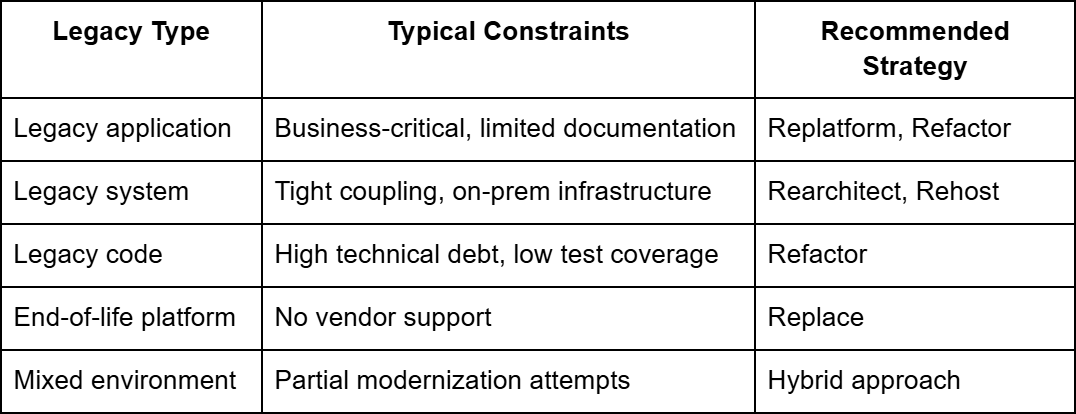
This is where legacy application modernization strategies, legacy system modernization strategies, and strategies for legacy code modernization begin to differ. Treating them all the same often leads to unnecessary risk.
When You Should Start Legacy Modernization
Many teams delay modernization because the system “still works.” In practice, modernization should start when:
- Delivery speed keeps dropping
- Simple changes require disproportionate effort
- Infrastructure costs grow without clear ROI
- Security or compliance risks increase
- Hiring becomes difficult due to outdated technology
Starting early allows you to choose a legacy application modernization strategy proactively - instead of reacting under pressure.

If your legacy system is slowing the business down, modernization doesn’t have to mean disruption. The right legacy app modernization strategy starts with understanding constraints, risks, and long-term goals - not rewriting everything at once.
Work with a technical partner who treats modernization as a controlled, step-by-step process that keeps the business running.
Final Thoughts
Legacy modernization isn’t about chasing new technology. It’s about restoring the ability to change safely. Whether you’re dealing with applications, systems, or code, effective legacy modernization strategies balance risk, cost, and business continuity.
The strongest results come from teams that treat modernization as a journey - not a one-time project.
FAQ
What are the best strategies for legacy modernization?
There is no single best option. The best strategies for legacy modernization depend on system criticality, risk tolerance, and business goals.
How do I choose a legacy application modernization strategy?
Start by identifying what limits your system today - infrastructure, architecture, or code. That usually points to the right approach.
Is it better to refactor or rebuild a legacy system?
Refactoring works when the core logic still has value. Rebuilding makes sense when maintenance cost outweighs benefits.
How long does legacy system modernization take?
From a few months for targeted refactoring to multiple years for large architectural transformations.
What are the risks of legacy code modernization?
Hidden dependencies, missing tests, and undocumented business rules are the most common risks.
Can legacy systems be modernized without downtime?
Yes. Incremental approaches allow modernization while keeping systems operational.
How much does legacy application modernization cost?
Costs vary widely depending on scope, risk, and chosen strategy. Discovery and planning usually define the real number.