

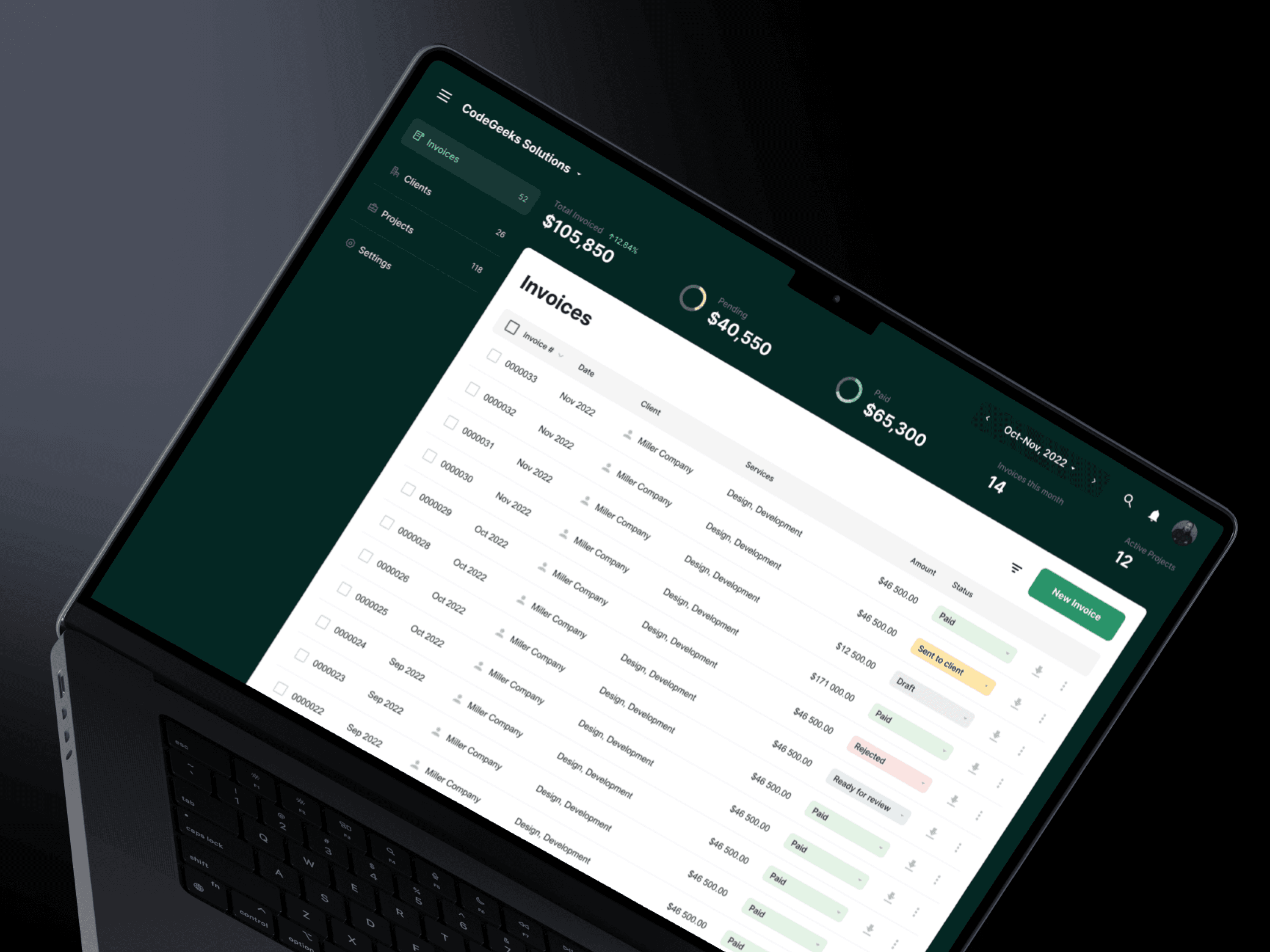
Launching a startup always means making decisions with limited data. You don’t know yet which features users will value, how they’ll behave, or whether the problem you’re solving is painful enough to pay for. That’s exactly where an MVP helps - not as a shortcut, but as a practical way to test assumptions, learn faster, and avoid building the wrong product.
What MVP Really Means for Startup Companies
MVP is one of the most overused terms in the startup world - and one of the most misunderstood. Many founders hear “MVP” and think of a stripped-down product rushed to market. In reality, an MVP is not about cutting corners; it’s about learning efficiently.
For MVP for startup companies, an MVP represents the smallest version of a product that can validate a real business assumption. That assumption might be about user behavior, willingness to pay, or whether a problem is painful enough to solve at all. The goal of startup MVP development is not to impress investors with features, but to reduce uncertainty as early as possible.
A useful neutral definition can be found on Wikipedia, which describes an MVP as a product built to test hypotheses with minimal effort:
MVP vs Prototype vs Full Product
These three terms are often mixed up, but they serve different purposes.
A prototype is usually internal. It helps teams explore ideas, flows, or technical feasibility. Prototypes may look convincing, but they rarely include real users or production-level logic.
An MVP, on the other hand, is meant to be used. It includes just enough functionality to observe real behavior and collect feedback. In MVP development for startups, this distinction matters because an MVP must be reliable enough to support learning, not just visual validation.
A full product comes later. It focuses on scale, optimization, performance, and edge cases. Building it too early is one of the most expensive mistakes in MVP startup software development.
When You Actually Need MVP App Development for Startups
Not every idea needs an MVP. But many do - especially when uncertainty is high.
You should seriously consider MVP app development for startups if:
- You’re unsure who your primary user really is
- The problem sounds good in theory but hasn’t been tested in practice
- The solution involves behavior change
- The market already has alternatives and differentiation is unclear
For a MVP development for tech startup, MVPs are particularly valuable when technical complexity is high. Instead of building infrastructure upfront, teams can validate demand before committing to long-term architecture decisions.
Your MVP tech stack should support experimentation without creating long-term technical debt. Decisions around backend architecture, integrations, data pipelines, and AI components directly affect how easily your product can scale after validation.
Startups that want to avoid rebuilding their core systems often consider AI transformation services to align architecture, automation, and AI capabilities from the beginning. This ensures the MVP is not just fast to launch — but structurally ready for growth.
Types of MVPs Startups Use in Practice
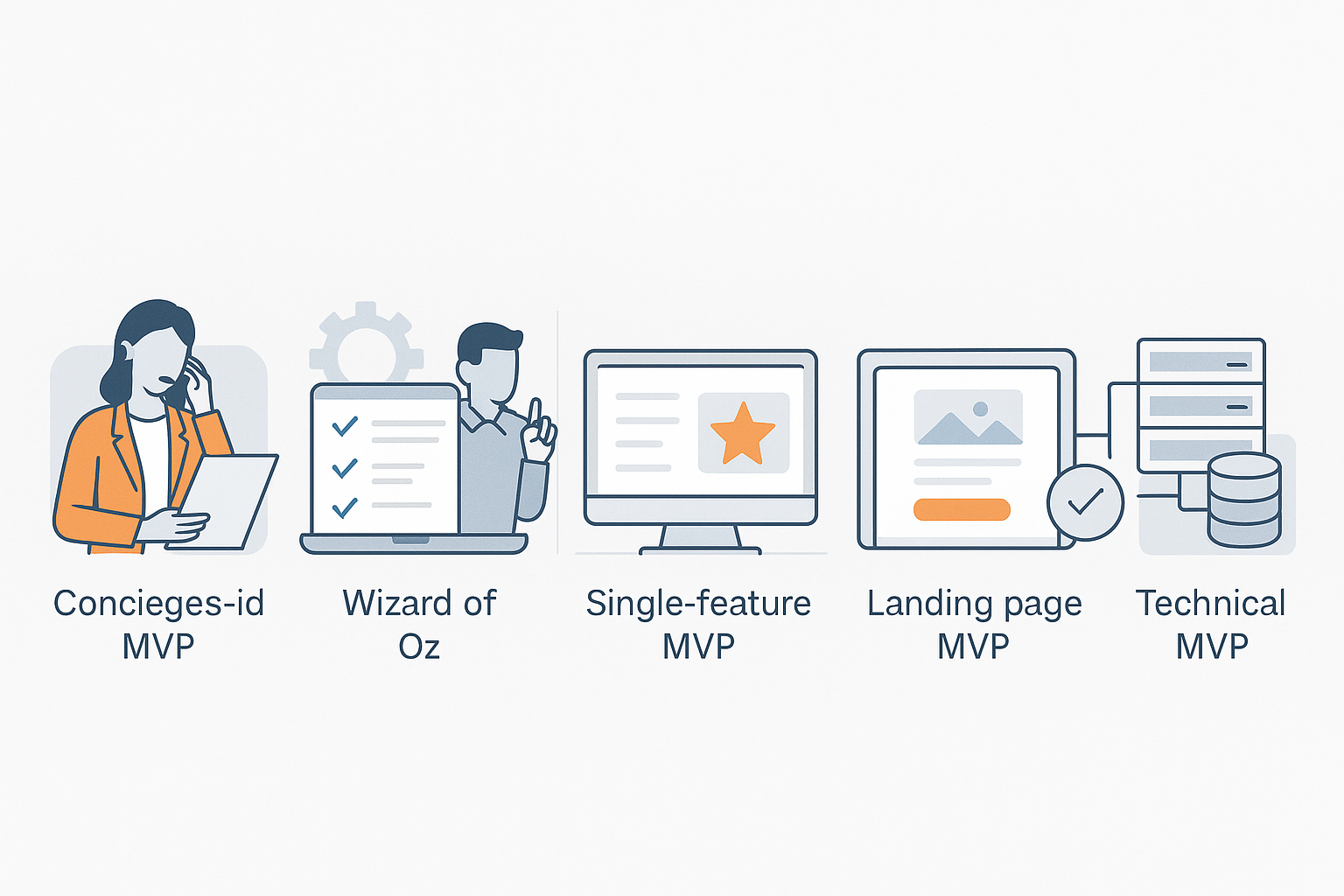
There is no single MVP format. The right type depends on what you’re trying to learn.
1. Concierge MVP
Manual delivery behind the scenes. The product “works,” but humans handle the logic. This is common when testing value propositions early in building MVP for startups.
2. Wizard of Oz MVP
Looks automated to users, but isn’t fully automated internally. Useful for testing UX and expectations.
3. Single-feature MVP
Focuses on one core workflow. Many successful products started with one strong feature rather than a platform.
4. Landing page MVP
Used to test demand before development. Signups, waitlists, or payments validate interest.
5. Technical MVP
Built to validate architecture, performance, or integration risks. Often relevant for MVP development for tech startup teams working with complex systems.
Step-by-Step MVP Development for a Tech Startup
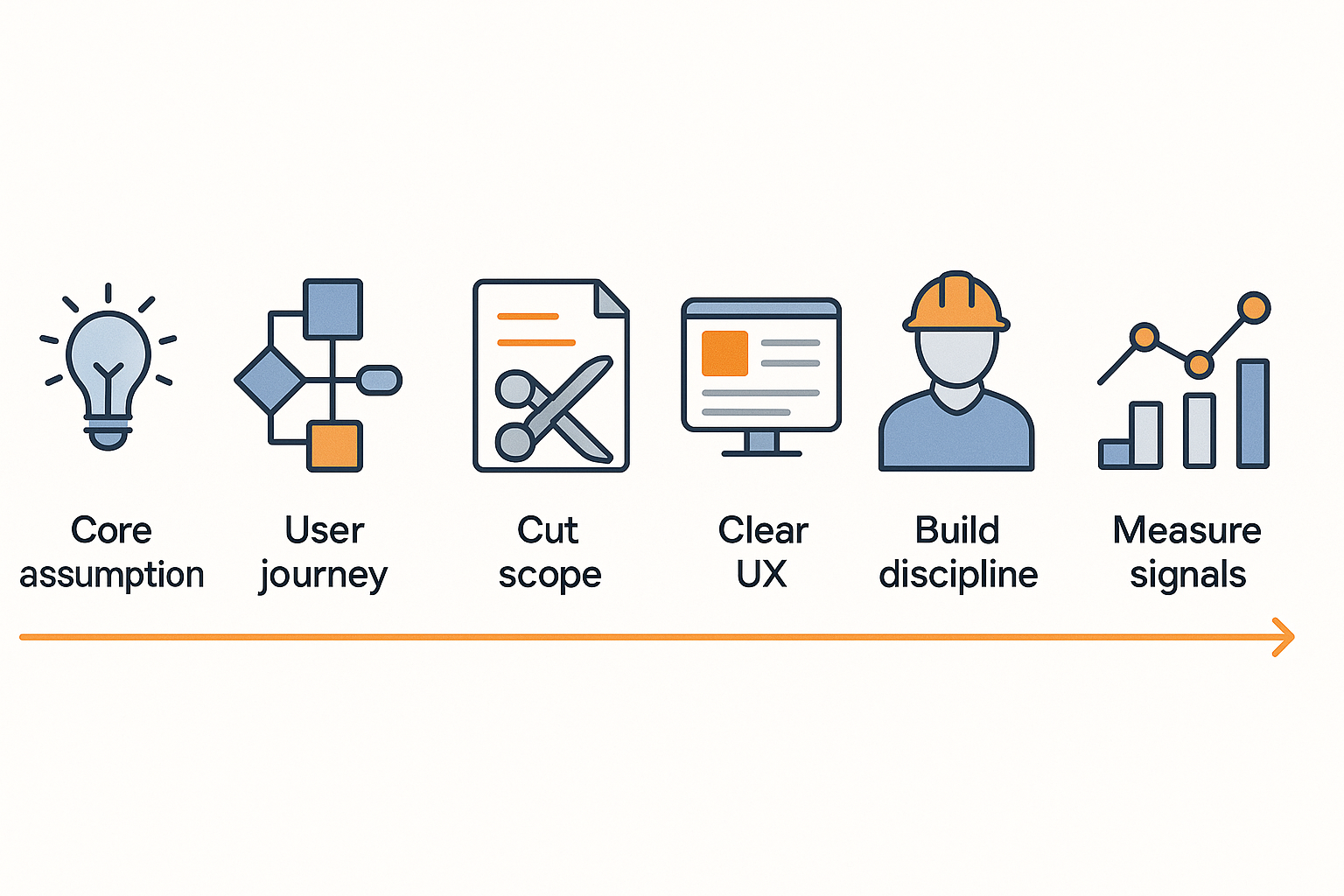
1. Define the core assumption
Every MVP should test one primary assumption. Not ten. Not five. One.
2. Map the user journey
Identify the smallest path that allows users to experience the value. This step often removes half the “must-have” features founders initially list.
3. Decide what not to build
This is where discipline matters most in startup MVP development. Features that don’t support learning are postponed.
4. Design for clarity, not completeness
UX should be simple and obvious. MVP users forgive missing features, but not confusion.
5. Build with production discipline
Even early MVPs should be stable. Poor quality data ruins learning and slows down MVP development for startups.
6. Measure real signals
Usage, retention, conversion, and qualitative feedback matter more than opinions.
A practical overview of MVP thinking in startup ecosystems is consistently discussed by Y Combinator.
If you’re considering MVP development for startups and want to avoid building something nobody uses, starting with a focused discovery phase makes a real difference. At CodeGeeks Solutions, we help founders clarify assumptions, scope MVPs realistically, and validate ideas with real users before scaling.
👉 Get in touch with our team to discuss your MVP
How Much Does MVP Development for Startups Cost?
Costs vary widely, but patterns are predictable.
Typical ranges:
- Simple MVP: $20,000-$40,000
- Mid-complexity MVP: $40,000-$80,000
- Complex technical MVP: $80,000-$150,000+
Key cost drivers:
- Number of platforms (web, iOS, Android)
- Integrations with third-party systems
Data complexity and security requirements - Quality of product discovery
Teams that rush into development without discovery often spend more later. This is a common lesson in MVP development for startup projects.
What Happens After MVP?
An MVP is not the end goal - it’s a checkpoint.
After launch, startups usually face one of three outcomes:
- Proceed - assumptions validated, roadmap expands
- Pivot - feedback reveals a different problem or audience
- Stop - idea doesn’t justify further investment
The worst outcome is pretending the MVP is a finished product. Successful MVP for startup companies treat MVP results as input, not validation of ego.
An MVP should validate your idea — but it should also minimize operational friction as traction grows. Manual onboarding, support handling, reporting, and internal coordination can quickly slow down a small team.
To reduce this overhead early, founders can leverage AI automation services to automate repetitive workflows, integrate tools, and introduce intelligent process management — freeing up time for product improvement and customer acquisition.
FAQ
How long does MVP development for startups take?
Most MVPs take 2-4 months, depending on scope and discovery depth.
What features should an MVP include?
Only features required to test the main assumption. Everything else waits.
Is MVP development suitable for non-tech startups?
Yes. Many non-tech founders use MVPs to test service models, pricing, or workflows.
When should a startup move beyond MVP?
When user behavior consistently supports the core hypothesis and metrics stabilize.