01
Static models degrade over time
Prediction quality drops silently as business data outpaces the training set.
A recommender trained on last year’s behaviour is already behind this quarter’s patterns


Most AI systems are built once and left to run. They degrade quietly as business reality drifts away from their training data. Our adaptive AI development services change that: we build systems that actively learn from every interaction, adjust to your evolving context, and become measurably more accurate over time.
Whether you need to personalise at scale, automate complex decisions, or turn live data into a competitive edge - our custom adaptive AI development services give your product a model that genuinely improves itself.
Prediction quality drops silently as business data outpaces the training set.
A recommender trained on last year’s behaviour is already behind this quarter’s patterns
A single model treats every user the same, regardless of how their behaviour has evolved.
Without a feedback loop, conversion stays flat no matter how you tune the output layer.

Every model update is a manual sprint - expensive, slow, and pulling engineers off product work.
A team running quarterly retraining is already 90 days behind its own data.
Systems built on historical data cannot act on what is happening now.
Pricing, fraud signals, and recommendations all fall out of step while the model waits for its next update cycle.

Proactively tailored models that adjust to your unique business context and data over time. We design the architecture, training strategy, and update cadence around your specific use case - not a template.

Define the right adaptive learning approach, feedback loops, and success metrics before writing a single line of model code. Reduces risk and accelerates delivery downstream.

Decision-making agents that improve through interaction with real environments. Ideal for optimisation problems: bidding, resource allocation, routing, dynamic pricing.

User-facing AI that adapts recommendations, content, and experiences to individual behaviour signals - increasing engagement and lifetime value across your product surface.

Automated data ingestion, model retraining, and deployment cycles. The model updates itself on schedule or event-trigger - no manual handoffs.

Connecting adaptive models to your existing systems, APIs, and data infrastructure. Minimal disruption; maximum leverage from what you already have.

Ongoing performance tracking, drift detection, and improvement cycles. We stay in the loop so degradation is caught before it reaches production KPIs.
Book a discovery call with our team - we will assess your data readiness, define the right adaptive approach, and map out a realistic roadmap.

Dynamically adjusting product, content, or action recommendations based on real-time behavioural signals.
Models that learn normal behaviour patterns and flag deviations as they emerge - without manual rule updates.

Adaptive models that update predictions as market conditions, demand signals, and competitive inputs shift.

Dialogue systems that improve response quality and intent accuracy through ongoing user interaction data.

Continuously updated profiles that power targeted engagement - segmentation that moves with your customers.

Systems that evolve to identify new fraud patterns without full retraining cycles - reducing false positives and missed cases.

Identify the business problem, data availability, and what 'better over time' means for this specific case — outcomes are defined before architecture is discussed.
Duration: 1–2 weeks


We help businesses modernize systems, automate workflows, and leverage AI to drive efficiency, innovation, and scalable growth.


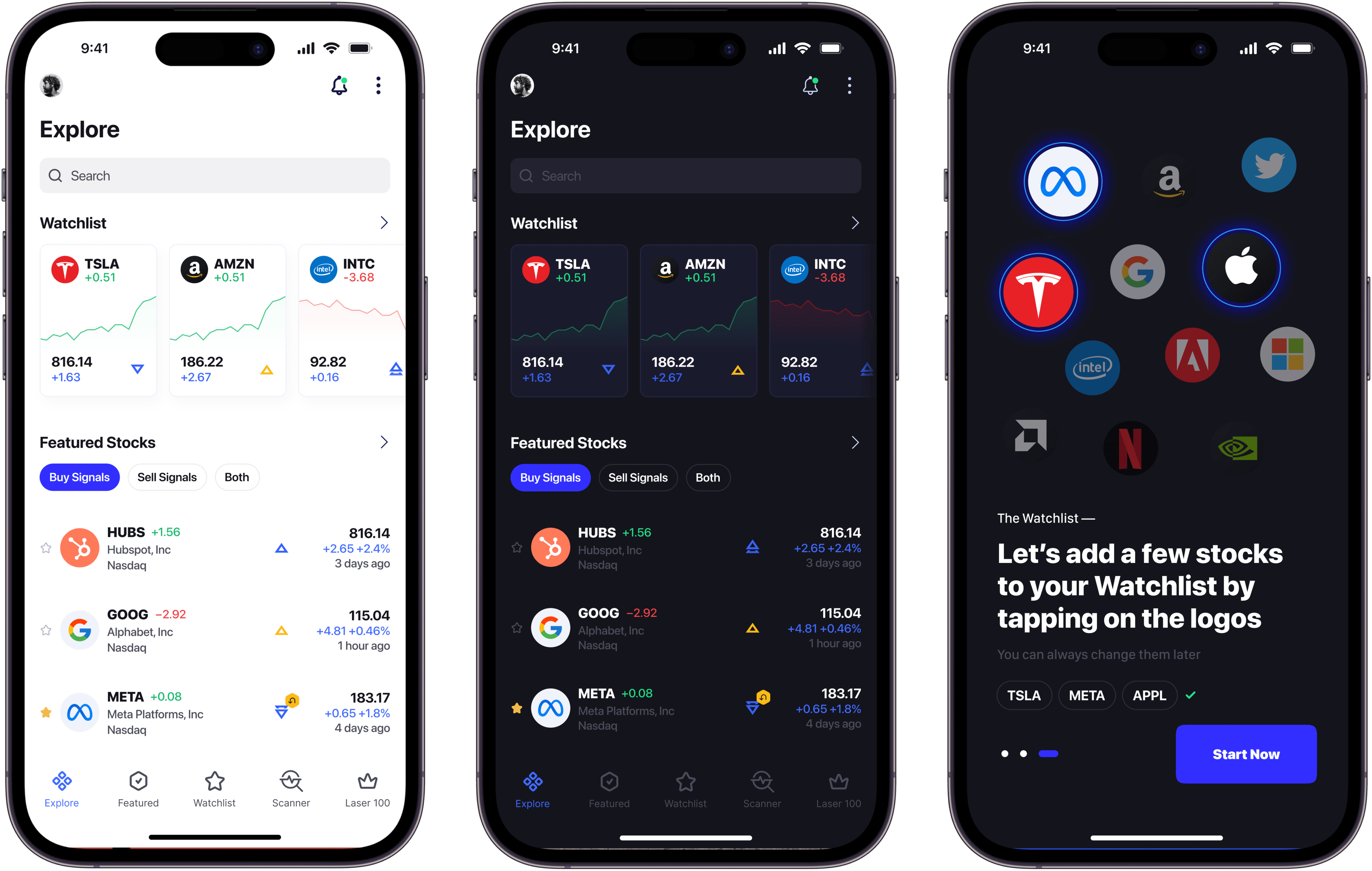
AI-driven app that acts as a personal advisor, analyzing market trends and using the client’s algorithms to offer real-time buy and sell recommendations.
Why Businesses Choose Us

You pay after milestones are delivered and accepted. No upfront risk, and no situation where our incentives stop aligning with yours once the invoice is sent.
Every artefact - models, pipelines, infrastructure configs - is yours on handover. No licensing fees back to us, no lock-in, no dependency on our continued involvement to keep the system running.
Weekly progress reports with time logs attached. At any point you can see exactly what was built, what is still in progress, and what comes next - without having to ask.
Strategy, discovery, build, launch, post-launch optimisation - one team throughout. Handoffs between phases are where things tend to fall apart; we avoid them by keeping continuous ownership across the whole engagement.
Adaptivity is not something we add on top once the static model is already built. Feedback loop architecture is a first-class design constraint from the first discovery session - which is the only way to build systems that actually improve over time rather than just appearing to.
We are not a consultancy that scopes projects and subcontracts the execution. Our engineers build, ship, and iterate. The case studies are there if you want evidence rather than claims.
When you hire an adaptive AI development company, the version of partnership that actually matters shows up after launch - during drift detection, retraining cycles, and the optimization work that determines whether the system keeps performing six months in. That is where we stay engaged, and where most vendors quietly step back.
Meet Our Team

I value our cooperation with CGS. They created a solution that will make the work of our brokerage agents faster and more effective. I appreciate that they were able to create a product that 100% suits our needs.
Partner with a team that owns the outcome - not just the delivery. Let's define what adaptive means for your business.
The term covers more ground than most people expect. At its core, adaptive AI development services are about building AI systems that do not stay frozen after deployment - they improve on their own as new data comes in. That means feedback loops built into the architecture, continuous learning pipelines, and monitoring for when the model starts drifting away from reality. The practical difference from a standard model build: instead of scheduling a manual retraining cycle six months from now, the system is continuously adjusting to your actual business conditions.
A traditional model is essentially a snapshot. It is trained on historical data, deployed, and then left running until someone decides to update it - which in practice often means it runs stale for longer than it should. Adaptive AI is built differently from the start: it takes in live signals - user actions, transaction outcomes, environmental shifts - and updates based on what it observes. The gap between the two approaches does not stay constant. The static model gradually falls behind; the adaptive one gradually improves. Over a long enough timeline that difference becomes significant.
Recommendation engines, real-time anomaly and fraud detection, dynamic pricing and demand forecasting, adaptive NLP and conversational AI, customer behaviour models, reinforcement learning agents. That covers most of the common production use cases. Every adaptive AI solution development engagement starts with a discovery phase, partly because the right solution type depends heavily on what feedback signals your data actually contains - not just what the business objective is on paper.
Honestly, scope varies too much for a single number to be useful. A focused build - one recommendation engine or anomaly detector where the data pipeline already exists - usually takes 6 to 12 weeks from discovery through to first production deployment. Systems with multiple feedback loops, or ones where the data infrastructure needs to be built first, take longer. We scope the timeline precisely during discovery rather than quoting a range and hoping it fits.
Two things at minimum: historical data relevant to whatever prediction or decision you are optimising, and a way to capture outcome signals after the model acts - whether a recommendation got clicked, whether a flagged transaction turned out to be fraud, that kind of thing. We look at data quality, volume, and labelling gaps during the discovery phase. If the infrastructure for capturing those outcome signals does not exist yet, building it becomes part of the engagement scope.
Yes, and this comes up regularly. Retrofitting is often the more practical path - it avoids a full rebuild and preserves the investment already made in the existing model. We audit the current AI system architecture, identify where feedback signals can realistically be introduced, and build the ingestion and retraining logic around what is already there. The end result is continuous improvement without starting over.
Drift is something we treat as a core engineering concern, not an afterthought. In every custom adaptive AI development service we deliver, monitoring is built in from the start - typically using tools like Evidently AI or Whylogs, with automated alerting set up to flag statistical distribution shifts before they start affecting production KPIs. The retraining cadence is designed to respond to detected drift, not to a fixed calendar schedule. Drift detection and ongoing optimisation are part of the scope, not a separate line item added after launch.